

Sam Cotterall
Director of Client Enablement


Sam Cotterall
Director of Client Enablement
Exactly one year ago, I made a professional pivot that surprised a few people.
For the four years prior, I worked as a consultant/manager for the largest sustainability advisory group where I focused on renewable energy procurement and asset management. Specifically, I was advising large organizations on renewable energy procurement and PPA contract negotiation with a sprinkle of post operational contract management. I learned how to structure contracts, manage risk, negotiate settlement mechanics, and navigate market complexity. It was an incredible education in how renewable deals get done.
But over time, I noticed something. While the focus of my work shifted back upstream after a contract was signed, my client’s work didn’t stop there… but the high-touch, white glove consulting services did.
In consulting, the finish line is a pens down, executed contract. The models are built, the executive presentation is delivered, and the deal is fully negotiated and signed. Pop the champagne! And rightfully so – this is a big milestone for any sustainability program.
But what happens next? Even before the asset goes operational a new set of questions need to be answered:
Those are not “negotiation” questions. They’re “operational” ones. And more often than not they’re an afterthought in the consulting world. Sure, a consultant can spin up spreadsheets, jump on quarterly check-ins, and manually audit invoices but the focus remains on getting the next PPA signed.
That gap in full lifecycle support of PPAs is what pulled me toward Verse. Matt, Verse Co-Founder, put it best. Before I accepted the job he challenged me to think about my responsibilities and sort them into “consulting problems” and “data/software problems.” It really got me thinking! So much of what we were doing manually could be transformed into a seamless and dynamic workflow through streamlined data pipelines and user-friendly ways to work with those data. I joined the Verse team!
Over the past 12 months, I’ve had a front-row seat to something I genuinely didn’t see in consulting: An actual product built specifically for what happens after PPA execution.
Portfolio Insights was never meant to be a static reporting dashboard, just a visualization of a static spreadsheet. It was designed to solve dynamic and recurring problems buy side energy professionals face once assets are live:
That mission is baked into the platform itself. And in the last year, I’ve watched that mission accelerate faster than I imagined was possible.
In consulting, forecasts often become static artifacts. A fundamental forecast is applied. A production profile is assumed. A long-term view is created.
But markets move. Weather shifts. Capture rates change. Settlement mechanics matter.
One of the most meaningful shifts I’ve seen at Verse is how forecasting is treated as a workflow and not a one-and-done spreadsheet model.
Verse separates near-term operational forecasting (0–36 months) from long-term planning (3+ years), blending advanced machine learning techniques to capture short-term dynamics with fundamentals for long-term strategy.
More importantly, forecasts are built around the questions finance teams actually pose to renewable programs:
This enhanced forecasting accuracy fosters critical trust across finance, energy, and sustainability teams, which is essential for garnering support for future decarbonization initiatives. The fastest way to erode confidence in a sustainability program is a big, unpredicted deviation from expectations, especially one that is not detected, understood, and corrected quickly.
And this year, we took that even further.
One of the biggest pain points I saw in consulting, and now see across clients, is this:
Many finance teams need numbers before invoices arrive to close the books.
Historically, that meant estimates based on models alone. But in Portfolio Insights, Verse integrated direct asset telemetry so generation data flows into the platform in near-real-time.
That means:
For finance teams, this is transformational. For energy managers, it changes the conversation entirely. You’re no longer waiting weeks after the end of month on a report produced by the developer to understand what happened this month or over the last contract year.
Another shift I’ve seen this year is scale, both technical and geographic.
Large enterprise buyers don’t manage a single asset in one ISO. They manage tens across continents and currencies.
Verse’s Portfolio Insights product supports Europe and other global markets through API integrations and LOTS of model optimizations, enabling global portfolio management in a single view.
In consulting, global visibility often means regional teams, separate models, and periodic consolidation.There’s nowhere to see a roll up of all your cashflows and EACs. In a software product, it becomes a unified system. That difference matters for global reporting.
The operational challenges often begin even before Commercial Operation Date (COD). A common issue we saw, and one that Verse is designed to address, is the pre-COD financial “gotcha” where market risk changes between contract signing and COD leading to surprise first-year financial outcomes. Traditional approaches often overlook this period, clinging to an investment decision NPV (Net Present Value) mindset left behind by consultants, but for finance teams, this early exposure requires careful accounting and forecasting driven by an operational cash flow perspective.
Verse helps manage the financial risk in this crucial phase by creating digital twins of the under development assets. These digital models provide a high-fidelity projection of performance, using real-world data to ensure that budget expectations are accurate from the moment the first test MWhs are produced.
This capability allows finance teams to shift their focus from long-term investment assumptions to true end-to-end operational and financial readiness, treating the pre-COD period as the first critical step in cash flow management. It also gives sustainability teams the ability to see the future impact of these assets, today.
If you’ve ever manually audited a VPPA invoice, you know how tedious it can be.
Spreadsheets. Market data. Line items. Emails. Manual reconciliations.
Portfolio Insights introduced an administratively focused invoice validation dashboard, surfacing pass/fail logic and enabling drill-down review instead of manual digging or long wait times for 3rd party support.
This is what operationalizing renewable energy looks like:
Reducing friction. Reducing manual risk. Increasing defensibility. Enabling asset managers.
Performance modeling moves beyond simply comparing market price columns and generation rows for invoice validation. It allows asset managers to shift their focus from mere arithmetic verification to deep operational analysis.
By building sophisticated models and applying data science (even incorporating real-time telemetry), Verse provides a view of how an asset should have performed under actual market and weather conditions. This capability answers the critical question of asset operation: Did the asset generate when prices were high, and did it curtail when prices were negative, aligning with the contract terms?
It transforms invoice validation from a reconciliation exercise into a performance audit, ensuring not just compliance, but true value capture.
One of the most fascinating feedback loops I’ve observed is how this quantified, real-world understanding of asset performance and the actual value of negotiated contract terms feeds back upstream to origination teams, enabling our clients to secure significantly stronger subsequent agreements with new developers. Most notably by shifting from simple annual inverter availability metrics to performance guarantees rooted in actual asset operations and production.
Consulting will always play a role in renewable energy procurement. Strategy, negotiation, and structuring are all critical capabilities. Operational asset management requires something else:
What I’ve seen at Verse this year is a deliberate move from reactive reporting to proactive portfolio management. It’s not about replacing strategy. It’s about supporting what happens for the next 15+ years after a contract is signed.
The biggest personal shift for me this year has been moving from advising on what should happen to building systems that reflect what does happen.
And after a year inside Verse, I’m more convinced than ever that renewable energy buyers deserve infrastructure that treats asset management as seriously as procurement.
The contract is just the starting point. The real story and impact is everything that follows. I have deep respect for the subject matter expertise and critical environmental impact that energy consultants drive every day. Thank you for your great work in getting these deals across the finish line! Verse is excited to take it from there.
My biggest personal lesson this year has been recognizing that the right tools in the right hands can dramatically accelerate that impact and change. The combination of expert knowledge with real-time software and advanced data science techniques should be the industry standard and that’s exactly what Verse delivers.
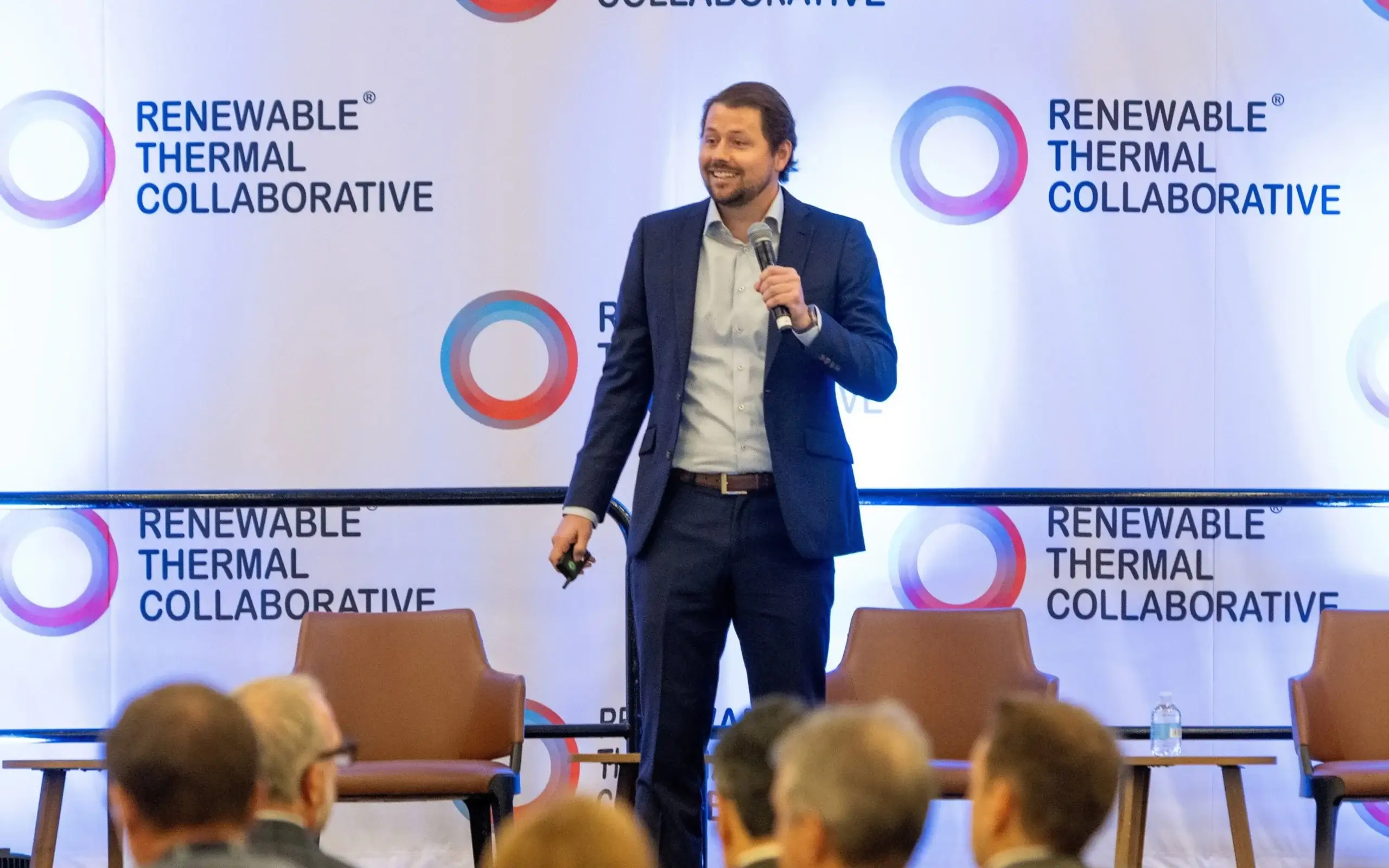
Beyond the technical leaps and financial rigor, this past year at Verse has also rekindled my own creativity and passion for what we do in this industry. We’re solving complex, high-stakes problems, but that doesn’t mean we can’t have fun doing it. I can’t think of anything that better captures that then my CEBA presentation with Shehzad (and subsequent webinar) relating PPA management to the hit show Love is Blind. Balancing impact and enjoyment is key. What wild concept will we tackle next to make operational asset management the most relatable part of your sustainability journey? Stay tuned.
A year ago, I joined Verse because I believed there might be a better way to give renewable energy buyers better operational support after contracts were signed.
Today, that belief is more than validated.
Next year, I’m excited to see what happens when operational rigor becomes the standard across all energy buyers — not the exception.
Because signing the contract was never the end of the story.
It was always the beginning.