
Winter Storm Fern exposed a critical gap in corporate PPA management: most owners had zero visibility during the most volatile pricing...
Seyed H. Madaeni, Ph.D
Co-Founder & CEO


Seyed H. Madaeni, Ph.D
Co-Founder & CEO
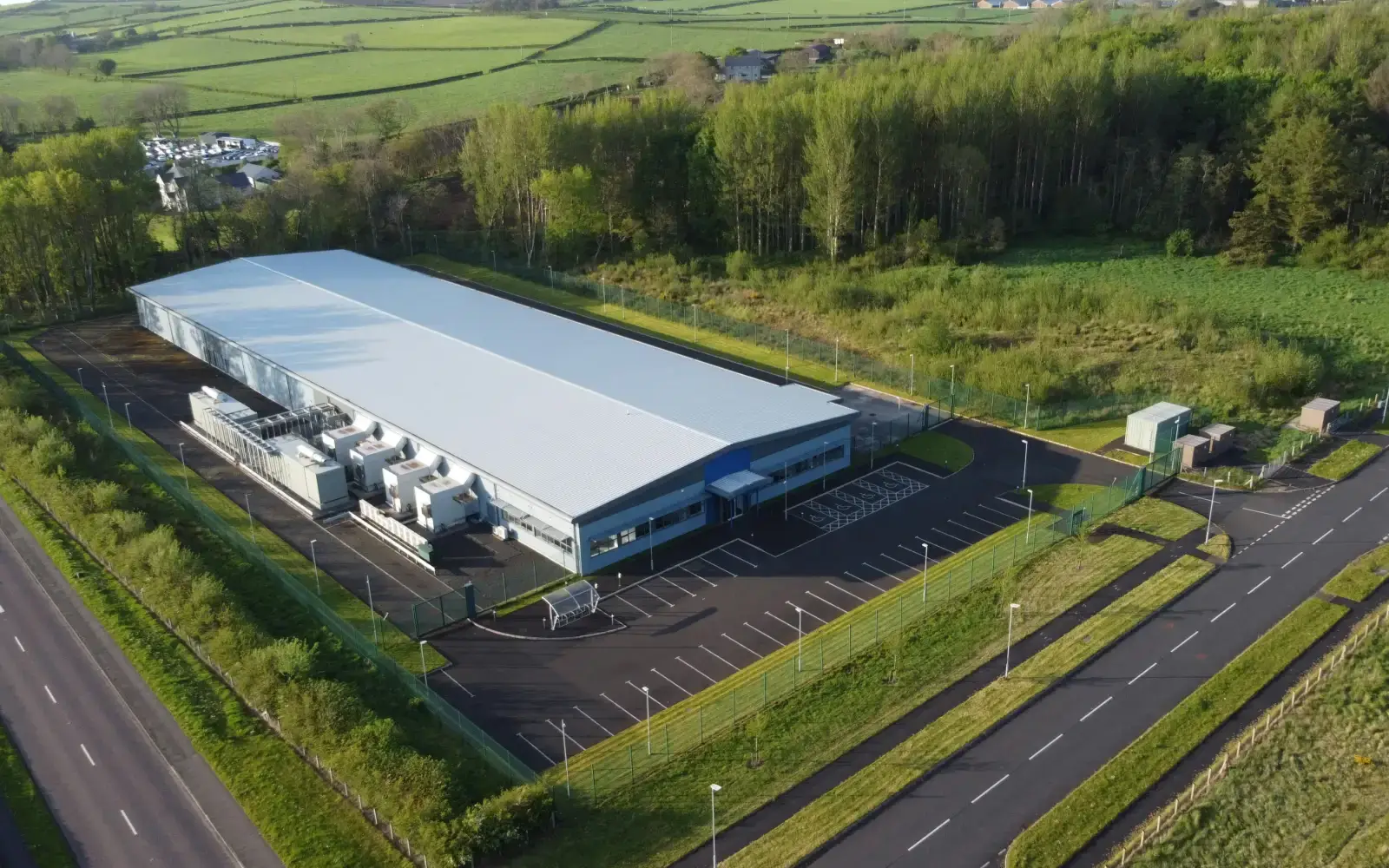
We are seeing accelerating adoption of clean power for data centers, driven by mounting environmental pressure, energy cost volatility, and new disclosure requirements.
According to research published in 2023 by S&P Global Intelligence, the U.S. data center industry “continues to pace the corporate renewables market,” with Amazon, Google, Meta, Microsoft, and Apple Inc. holding a combined renewable portfolio totaling over 45 GW globally, more than “half of the global corporate renewables market.”
The report also found that four major data center providers have collectively increased their renewable investments to 1,500 MW, while Google, Microsoft, and Iron Mountain are “taking extra steps in order to be powered by clean energy around the clock.”
Yet, procuring clean power for data centers is far from straightforward. Between contract complexity, grid variability, and evolving policy, procurement teams must navigate competing priorities to find solutions that align with business goals, financial stability, and decarbonization targets.
By thinking strategically about how and where to buy clean power, and by leveraging energy procurement software to simulate cost and carbon impacts, data center operators can reduce emissions, hedge against market volatility, and strengthen long-term operational resilience.
There are four primary reasons why data center leaders should pursue clean power now rather than later: environmental responsibility, regulatory readiness, financial stability, and customer trust.
Pursuing clean power now delivers immediate climate benefits. Every megawatt-hour of renewable energy displaces fossil-fuel-based electricity, reducing a data center’s Scope 2 emissions and helping the organization meet its net-zero targets faster.
The sooner data centers move away from traditional energy sources, the sooner they can reduce their carbon footprint and demonstrate leadership in sustainability, a growing differentiator in the infrastructure and enterprise IT sectors.
Beyond ethics and reputation, proactive decarbonization also helps future-proof operations against emerging climate disclosure laws.
For instance, California’s Senate Bill 253 will require companies with annual revenues above $1 billion to publicly report Scope 1, 2, and 3 greenhouse gas emissions. Similarly, the SEC’s proposed climate-related disclosure rules could take effect soon, requiring detailed reporting on emissions and risk management strategies.
Taking early action ensures data center operators are prepared when these frameworks become mandatory, and not scrambling to meet new compliance requirements.
Proactive action is more strategic than reactive action. If providers wait, they may be left with little time to adapt to evolving regulations and investor expectations.
Clean energy adoption isn’t just about sustainability, it’s a hedge against energy price volatility.
Data center energy costs can fluctuate dramatically due to inflation, geopolitical events, and natural disasters. By integrating renewable assets or signing virtual power purchase agreements (VPPAs), operators can lock in predictable pricing and improve financial resilience.
The result is lower exposure to market swings and a more stable long-term cost structure, a crucial factor as data demand and electricity consumption continue to rise.
Sustainability has become a purchasing criterion. Customers increasingly prefer data centers powered by renewable energy, and many enterprise clients include clean energy requirements in RFPs.
By procuring clean power, operators can meet client expectations, strengthen brand differentiation, and deepen relationships with hyperscale partners that have already committed to 24/7 carbon-free energy (CFE).
Not all clean power strategies are created equal. Data center operators can pursue several approaches, each with its own costs, benefits, and tradeoffs.
Under this approach, operators match their annual energy consumption with an equal amount of renewable generation.
For example, if a data center consumes 100,000 MWh per year, it procures 100,000 MWh of renewable energy, often through PPAs or renewable energy tariffs.
While simple and scalable, this strategy doesn’t guarantee that renewable generation occurs in the same region or at the same time as consumption, limiting its impact on local decarbonization.
This method focuses on avoided emissions rather than megawatt-hour equivalence.
If a facility emits 40,000 tons of CO₂ from its electricity use, it procures renewable energy projects that avoid 40,000 tons of CO₂ elsewhere.
Carbon matching prioritizes emissions impact per dollar, often favoring projects in grids with higher carbon intensity. However, it can overlook regional infrastructure improvements.
The most advanced strategy, 24/7 CFE, aims to match every hour of consumption with carbon-free generation within the same grid.
This approach requires detailed energy forecasting, real-time tracking, and often VPPA arrangements to ensure every megawatt-hour consumed is backed by carbon-free supply.
While the most complex and expensive, it provides the most accurate accounting of Scope 2 emissions and aligns with the long-term goals of hyperscalers and forward-looking enterprises.
“Google, Microsoft, and Iron Mountain are taking extra steps in order to be powered by clean energy around the clock.”
Before selecting a strategy, data center leaders should clearly define financial and sustainability priorities.
While decarbonization and cost control often align, they don’t always move in the same direction. For instance, building in one location may offer strong renewable integration but lead to higher operating expenses due to regional clean energy costs.
Once goals are set, operators can use AI and scenario planning tools to compare outcomes across strategies, modeling variables like contract length, energy price forecasts, and emissions profiles.
Verse’s energy forecasting platform helps procurement and sustainability teams evaluate potential PPAs, simulate PPA vs VPPA performance, and assess long-term carbon benefits before committing to contracts.
Clean energy procurement isn’t a short-term project, it’s a multi-decade strategy.
Data centers should aim to build 10–30 year roadmaps that align with operational expansion plans, evolving regulations, and market conditions.
This includes evaluating the impact of long-term PPAs, understanding grid interconnection risks, and modeling how technology changes, like battery storage and renewable capacity growth, may affect pricing over time.
With proper forecasting and analytics, operators can design portfolios that deliver sustainability and financial stability across market cycles.
Transitioning to clean power requires careful coordination across teams, from procurement to operations.
Electricity reliability remains paramount; any clean power strategy must maintain uptime and performance. This is especially important for hyperscale facilities and mission-critical workloads.
Because power markets, contract terms, and regulatory conditions vary widely, many data center operators turn to partners like Verse for guidance. Verse’s energy procurement software provides the modeling, validation, and reporting needed to ensure each step supports both cost and carbon objectives.
Switching to clean power is a gradual process, not an overnight transformation, but strategic steps taken today can position operators for decades of energy and emissions leadership.
Clean power is no longer optional for data centers, it’s a business imperative.
By acting now, leaders can reduce emissions, hedge against market risk, comply with evolving disclosure rules, and meet the expectations of both customers and investors.
With platforms like Verse, operators can forecast outcomes, compare procurement options, and plan roadmaps that achieve both financial performance and decarbonization goals.
Ready to model your clean energy future?
See how VPPA evaluation works or talk to our team to explore how Verse can support your data center’s clean power transition.
This article was originally posted as part of the Forbes Business Council.
IMPORTANT NOTICE: This page is provided for general informational purposes only and does not constitute individualized advice or a recommendation tailored to your specific circumstances. Verse provides analytics software. The platform provides generalized models, scenarios, and reporting for educational and informational purposes. Verse is not acting and does not claim to act as an advisor to any counterparty, customer, or user of this website and expressly disclaims any fiduciary relationship or similar obligation to act on behalf of or in the best interest of any such counterparty, customer, or user of this website. In addition, Verse is not registered with the U.S. Commodity Futures Trading Commission as a commodity trading advisor in order to provide advice regarding the value or advisability of trading in swaps, futures, options, or other regulated derivatives products. Past or simulated performance is not necessarily indicative of future results. You should consult your own independent legal, accounting, and other professional advisors prior to engaging in any transactions or services described on this website.