Verse is a rocketship propelling the energy industry forward. Explore the UniVerse to see where we’re innovating and building tools that make the energy transition faster, smarter, and more fun.
Verse is a rocketship propelling the energy industry forward. Explore the UniVerse to see where we’re innovating and building tools that make the energy transition faster, smarter, and more fun.
Corporate PPA Visibility: How Verse Clients Gained a Critical 25-Day Advantage During Winter Storm Fern
Table of contents
Overview
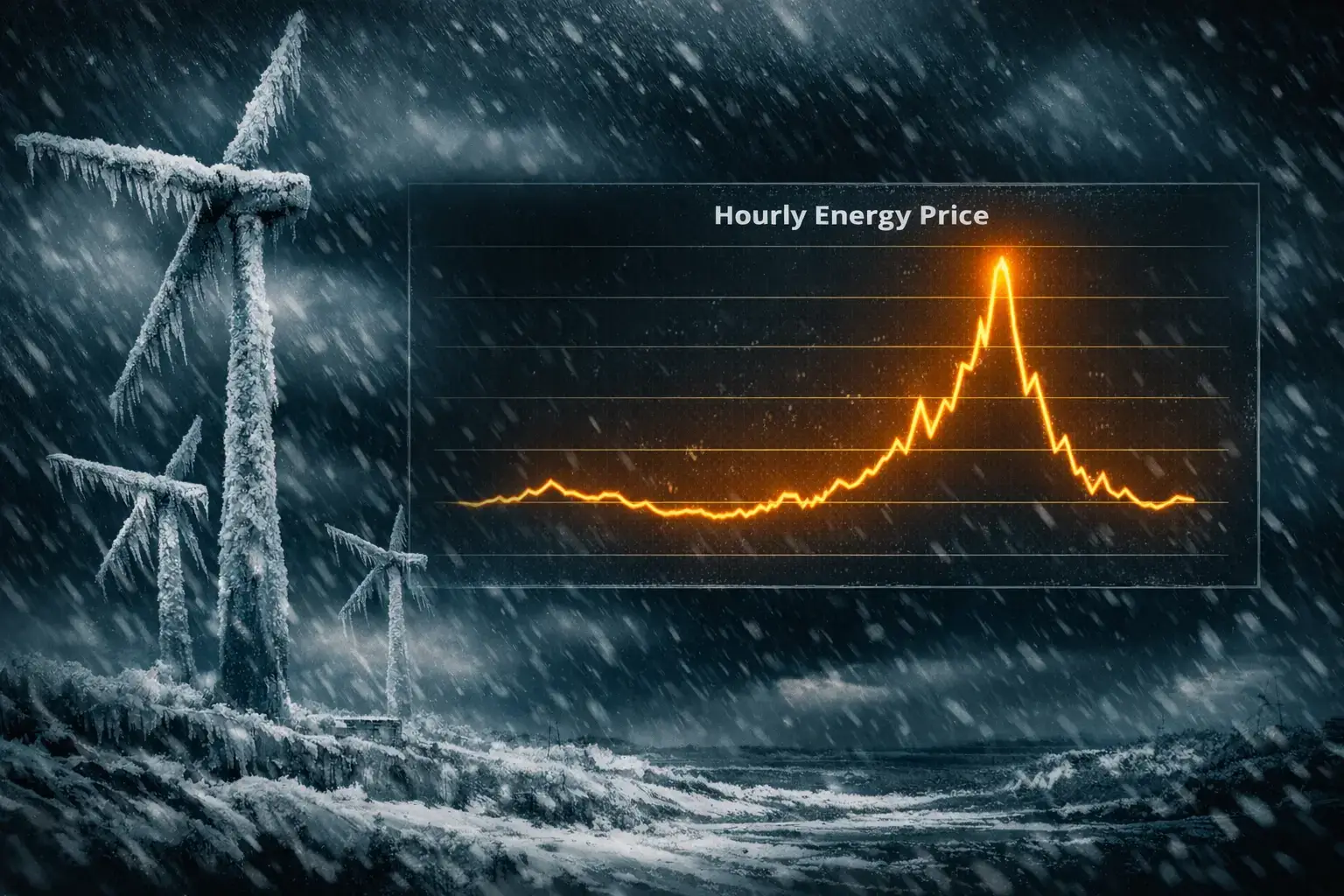
In late January 2026, Winter Storm Fern exposed a critical weakness in corporate PPA management: when ERCOT plunged into sub-freezing temperatures and real-time prices spiked above $1,000/MWh in the North Hub, most corporate PPA owners had no way to know how their assets were performing until weeks later.
For energy buyers with operational PPAs, the question wasn’t theoretical: Were our assets generating during the peak?
For most PPA owners, the answer would not arrive for 25+ days, when developers issued monthly invoices. But leadership teams weren’t willing to wait weeks for answers during one of the most volatile pricing events of the year.
This is no longer just an operations problem. As extreme weather events become more frequent and energy markets grow more volatile, corporate PPA performance is increasingly a boardroom-level conversation. CFOs and procurement leaders are being asked to justify the financial value of long-term PPA commitments in real time (not 25 days after the fact). The teams that can answer those questions quickly and confidently are the ones building strategic credibility with leadership.
Verse clients entered February with real-time performance visibility, quantified revenue impact, and a clear executive narrative while others were still waiting for invoices before measuring the storm’s impact.
The Corporate PPA Challenge: Managing in the Dark
Managing in the Dark During Extreme Volatility
Winter Storm Fern created a perfect storm of complexity:
Icing events that forced some wind turbines offline
Yet for most teams managing renewable energy procurement, performance visibility lagged settlement cycles by 25+ days.
CUSTOMER’S CHALLENGES
VERSE APPROACH
RESULTS
During Winter Storm Fern ERCOT plummeted into sub-freezing temps and real-time prices spiked over $1000/MWh in the North Hub.
The Standard Delay: Most asset owners won’t see their asset’s performance until the third week of February, when developers typically issue monthly invoices.
The Management Challenge: Leadership will ask, “How did we perform?” within hours of a storm, not weeks. Waiting 25+ days for an invoice means managing in the dark during the most volatile market sessions.
API-Driven Telemetry Data: Verse connects directly to your asset’s SCADA and telemetry feeds, bypassing the “middleman” of developer reporting.
The Advantage—Zero Latency: View generation, availability, and curtailment data in near-real time, not weeks later.
Financial Accuracy: Real-time pairing of asset generation with settlement point prices to estimate revenue and exposure before the close of the month.
Asset managers and their leadership enter February with a clear narrative of performance, rather than a list of questions for the developer.
Just because there was wind does NOT mean that your asset was generating during Fern.
The standard process:
Wait until mid-to-late February for January invoices
Review rows and columns in Excel
Attempt to reconstruct what happened
Meanwhile, leadership was asking:
“Did we capture the price spike?”
“Were we online during the peak?”
“How did this impact January net spend?”
The complexity was compounded by renewable dynamics. As discussed in our recent webinar, renewables don’t behave “normally.” Financial performance depends on the intersection of weather, market price, and timing.
Just because prices spiked didn’t mean assets were generating. And just because there was wind didn’t mean turbines weren’t iced out. Two nearly identical wind assets in the same market could have dramatically different outcomes.
Verse approached Winter Storm Fern with two core capabilities designed to give corporate PPA owners real-time control
API-Driven Telemetry (Zero Latency Visibility)
Verse connects directly to asset SCADA and telemetry feeds, enabling near real-time visibility into:
Generation
Availability
Curtailment
Revenue meter data
Instead of waiting for a developer invoice, clients could immediately determine:
Was the asset online?
Did it generate during high-value intervals?
What was the estimated revenue impact?
Verse pairs live generation data with settlement point prices to estimate financial performance before month-end close.
A Four-Pillar Framework for Explaining Variance
Beyond knowing what happened, Verse helps explain why it happened using a structured framework:
Resource Availability
Was the wind there? Was icing within operational limits?
b. Is it an “Act of Nature” or an “Act of Operator”?
Market Price Drivers
Gas prices, degree days, and demand shifts that influenced volatility
Timing & Capture Rates
Were assets generating during high-value intervals?
Contract Terms & Developer Claims
Were availability guarantees, basis intervals, and curtailment provisions applied correctly?
This framework turned raw telemetry into executive-ready narratives, giving corporate PPA owners the clarity they need before month-end close.
What Corporate PPA Owners Should Be Asking Right Now
Winter Storm Fern is a reminder that corporate PPA management doesn’t end at contract signing. For corporate PPA owners, the real work begins once the asset is operational, and that requires asking harder questions of your developers.
Are you receiving generation and availability data in real time, or are you waiting for a monthly invoice to understand performance? When a major weather event hits your market, can you quantify the financial impact within hours or weeks? And when your developer submits an invoice, do you have independent data to verify their claims against actual market conditions?
If the answer to any of those questions is uncertain, you may be managing one of your most significant financial commitments without the visibility it deserves. The four-pillar framework Verse uses (generation, market prices, capture rates, and contract terms) exists precisely to close that gap and give renewable energy procurement teams the confidence to manage proactively, not reactively.
The Result: From Reactive to Proactive Corporate PPA Management
A Tale of Two Assets
During Winter Storm Fern, Verse modeled two potential outcomes for a 220 MW ERCOT wind asset
Scenario A: The “Iced” Asset
Freezing rain caused turbine icing
Asset cut out during $1,000/MWh peak intervals
$0 earnings during peak storm window (Jan 25–26)
$320K total impact across Jan 25–28
Telemetry Insight: Verse API integration showed zero generation in real time, allowing the team to immediately notify leadership that the asset did not capture high-value intervals
Scenario B: The “Performing” Asset
Maintained 98% availability during the storm
Generated during high-value evening intervals
$260,000 in revenue from Jan 25–26, 2026
$580,000 total impact across Jan 25–28, 2026
Telemetry Insight: Verified generation during peak pricing and reported a quantified revenue impact before month close
The Executive Impact
Instead of saying, “We’ll know in a few weeks when the invoice arrives,” Verse clients were able to say, “We captured $260K during the storm peak despite lower month-to-date pricing.”
Or, when applicable: “The asset iced out during peak intervals. Here’s the quantified impact and how we’re adjusting.”
As emphasized in the webinar, this moves teams from defense to offense
From reacting to invoices
To proactively managing volatility
From explaining variance retroactively
To controlling narrative in real time
Corporate PPA Management Requires Real-Time Control
From Volatility to Control
Winter Storm Fern demonstrated a critical truth for renewable energy procurement: market volatility doesn’t create risk by itself. Lack of visibility does.
By combining real-time telemetry, financial-grade settlement modeling, and structured variance analysis, Verse transformed a high-stakes storm event into a clear, quantified executive narrative. Instead of waiting for answers, clients had them.
But Winter Storm Fern won’t be the last test. As extreme weather events become more frequent across ERCOT and other markets, the gap between teams that manage corporate PPAs proactively and those still waiting on invoices will only widen. The difference isn’t luck. It’s infrastructure.
Leading energy teams are no longer accepting a 25-day lag as the cost of doing business. They’re demanding real-time visibility into generation, availability, and financial impact before the storm has even passed.
For corporate PPA owners, the question is no longer whether real-time corporate PPA visibility is possible. Verse has proven that it is. The question is how long you can afford to manage without it.
PPA Performance and Risk Assessment
Pressure-test performance visibility, variance explainability, and cross-functional alignment across finance, sustainability, and energy with this 5-minute assessment.