Verse is a rocketship propelling the energy industry forward. Explore the UniVerse to see where we’re innovating and building tools that make the energy transition faster, smarter, and more fun.
Verse is a rocketship propelling the energy industry forward. Explore the UniVerse to see where we’re innovating and building tools that make the energy transition faster, smarter, and more fun.
How Anthesis Group Gets Scope 2 Emissions Forecasting Exactly Right
Anthesis Group is using Verse to help clients accurately forecast Scope 2 emissions and build smarter decarbonization and clean energy investment strategies.
Scope 2 emissions are the indirect greenhouse gas emissions that result from purchased electricity, heat, steam, or cooling. Unlike Scope 1 emissions, which come directly from a company’s own operations, Scope 2 emissions are produced by the grid supplying energy to a facility. For most organizations, they represent a significant share of total emissions and one of the highest-leverage opportunities for reduction.
“Projected grid emissions” are the anticipated levels of emissions from electricity generation based on factors such as planned changes in the energy resource mix and policy initiatives.
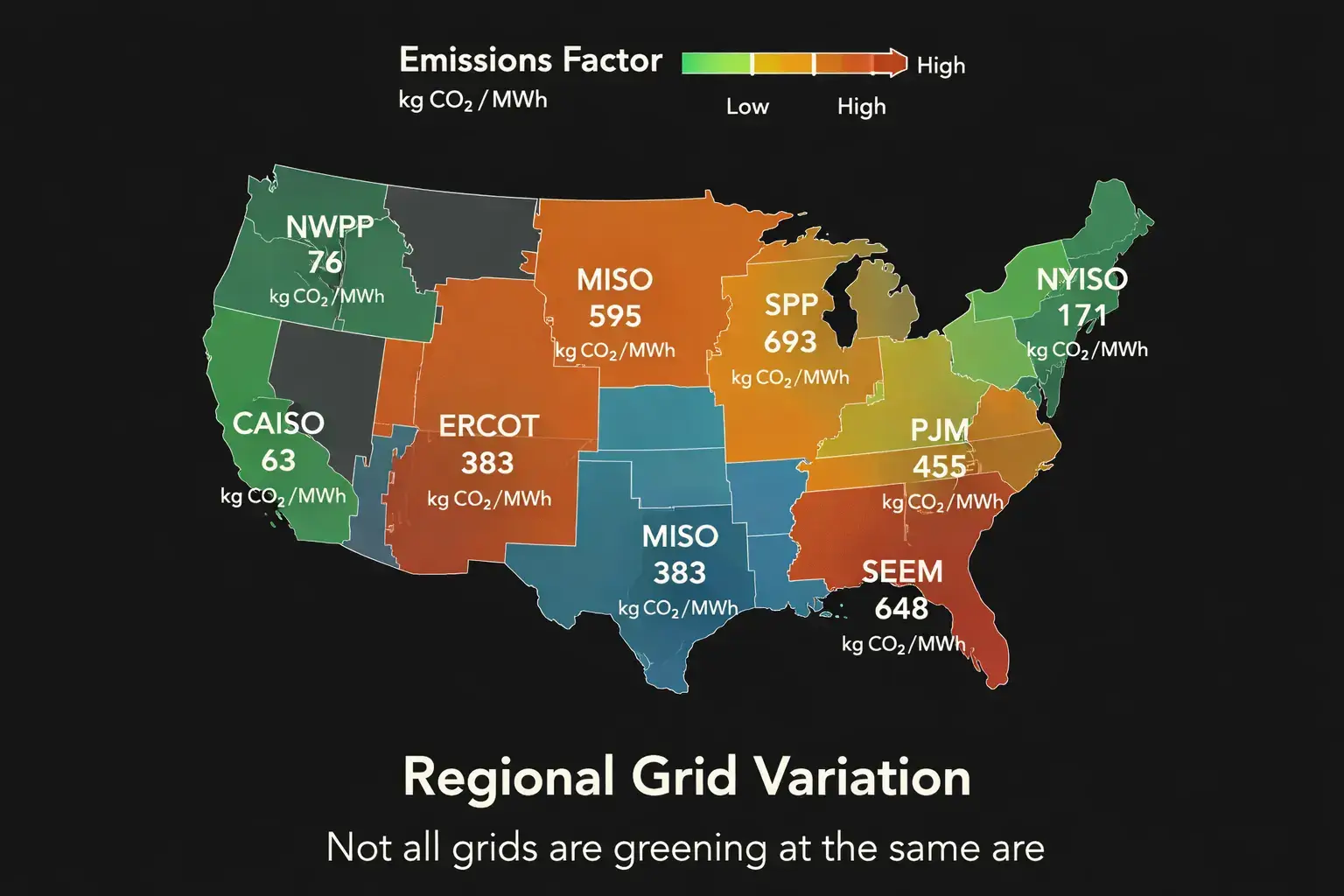
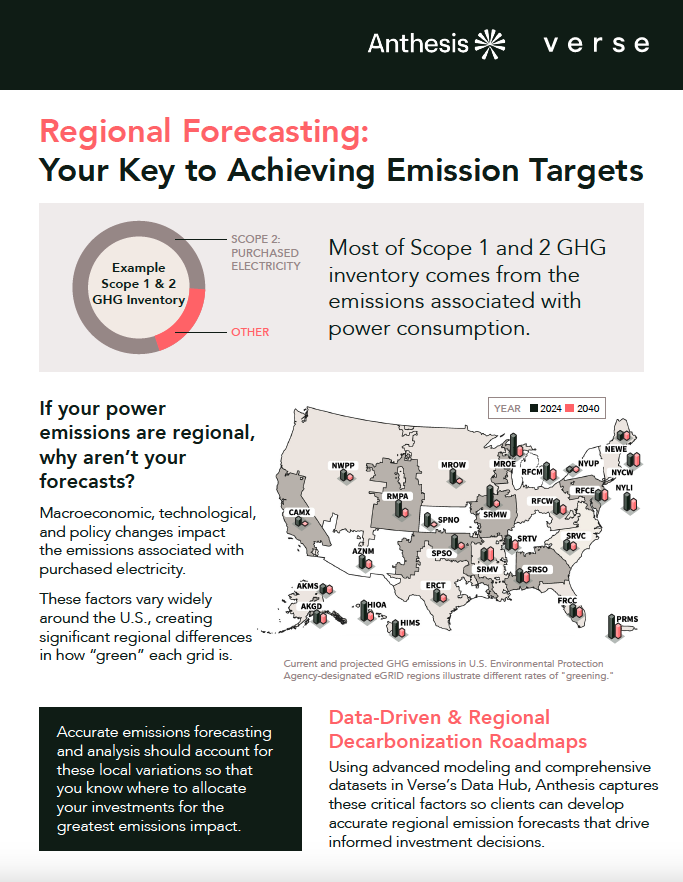
These grid emissions factors vary widely across the U.S. because not all electric grids are “greening” at the same rate. For instance, California’s grid, which benefits from ambitious decarbonization policies as well as significant existing and planned deployments of clean energy resources, is projected to reduce its emissions much faster than the grids in Pennsylvania, New Jersey, and Maryland.
Accurate emissions forecasting and analysis should account for these local variations. Forecasting isn’t a one-size-fits-all activity, so why would organizations use one-size-fits-all data? Grid emissions factor data helps companies understand how the emissions from their facilities will evolve based on their decisions but also on the local grid’s development, and where to invest for the greatest emissions-reduction impact.
Why Scope 2 Emissions Factors Must Be Location-Based
The Greenhouse Gas Protocol, the most widely used international standard for corporate emissions accounting, specifies a location-based method for calculating Scope 2 emissions. This method uses regional average emissions factors drawn from actual grid data where consumption occurs, rather than contractual instruments. CDP reporting frameworks follow the same approach. Building Scope 2 forecasts on regional emissions factors ensures projections are analytically grounded and defensible under the disclosure frameworks that investors and regulators expect.
Getting Scope 2 right isn’t just a reporting exercise. It has direct implications for capital allocation. Organizations that rely on imprecise Scope 2 data risk misidentifying where emissions reductions are achievable, overstating the projected impact of clean energy investments, and building decarbonization roadmaps that don’t hold up under scrutiny. As voluntary and regulatory disclosure requirements tighten globally, the quality of an organization’s underlying Scope 2 emissions data matters more than ever.
Organizations with accurate Scope 2 forecasts are better positioned to set credible reduction targets, make the case for clean energy investments internally, and respond confidently to investor and regulatory inquiries.
Your Clean Energy Investment Decisions Are Only as Good as Your Scope 2 Data
U.S. Environmental Protection Agency-designated eGrid regions account for unique emissions factors applicable to regional grid electricity consumption. They are more granular than U.S. wholesale power markets, allowing for higher-fidelity data. And because they are used as the basis for reporting requirements from standard-setting organizations such as the Greenhouse Gas Protocol and Carbon Disclosure Project, eGrid regions help organizations align their emissions projections with regulatory and voluntary frameworks.
For organizations calculating location-based Scope 2 emissions in the U.S., eGrid subregions are the recommended unit of analysis and the emissions factors derived from them are the inputs that make facility-level Scope 2 forecasting meaningful.
How Verse’s Data Hub Powers Scope 2 Forecasting
Verse’s Data Hub is built on proprietary methodology developed by Verse’s data science team, making Verse itself the authoritative source for regional emissions factor data. The platform normalizes this data into a single continuously updated resource and makes it queryable at the subregional level (without the manual data engineering that typically slows Scope 2 analysis). Sustainability teams and their advisors get the granular, current data they need to build Scope 2 forecasts that are accurate, regionally specific, and aligned with GHG Protocol and CDP reporting standards.
Anthesis Group uses the advanced modeling and datasets in Verse’s Data Hub to capture critical grid emissions factors so its clients can develop accurate regional emissions forecasts that drive informed decarbonization planning and investment decisions.
With Verse’s Data Hub, Anthesis clients can identify which facilities carry the highest Scope 2 emissions burden, model how that burden shifts under different grid trajectories, and prioritize clean energy investments where they will have the greatest measurable impact. The result is a decarbonization roadmap grounded in accurate, regionally specific Scope 2 data (one that can withstand the scrutiny of investors, regulators, and internal stakeholders alike).
Click the image below to access the Anthesis Group/Verse one-pager.